While the traditional and historical aspects of Japanese culture still remain the central focus for ceremony and celebration, increasingly modern culture is beginning to establish its own traditions and events. This phenomenon has been primarily driven by the increasing popularity of Japanese animation (known as anime) and also through a wide range of ‘Marvel’ comic superheroes that have invaded the country through numerous action packed movies from the US. As a result, there are many anime/comic stores throughout the country where you can also buy an extensive range of books, videos, memorabilia and costumes. Here the youth of Japan often spend a small fortune on their collections and enjoy nothing more than actually dressing up and parading as their favorite characters. They certainly need little encouragement to take to the streets for the annual Nipponbashi Street Festa, which is a particularly popular annual event in Osaka. This is an anime-themed festival that his held in an area called Den Den Town, which is the electronics centre of Osaka and home to all things manga or anime.
Although the weather was cold and overcast (being March), Jules and I decided to head downtown to see what it was all about. Coming up from the underground, it was clear that this was a very popular event, with large crowds streaming into the area. Increasingly, the sight of coloured hair and strange looking costumes gave us a pretty good guide that we were heading in the right direction. Yet with temperatures plunging and the clouds quickly building, we weren’t quite sure whether festivities might soon be called off by the time we got there. We should have realized that such devoted fans are made of sterner stuff than that and even when a slight bit of snow did eventually fall they remained there in force.
With the normally busy streets closed off from traffic, a wide range of fascinating characters could be seen, each striking well practiced poses for groups of excited amateur photographers. For everyday people, dressing up in such extravagant costumes certainly generated the sort of frenzied attention that would normally be reserved for pop stars and movie idols. There were no inhibitions here, with plenty of cross-dressing and a proliferation of skimpy costumes despite the chilly weather. No one was camera shy either; they seemed to love acting out their characters and appeared to thrive on all the attention. In the parking lot, highly decorated cars adorned with popular anime graphics were also very much the centre of attention. Their owners could be seen vigorously wiping down their pride and joy once the brief burst of snow had passed and as the sun re-emerged, their shiny cars became the backdrop for even more photographs.
There was certainly no denying the energy and excitement of both the crowds and its participants at this years Nipponbashi Street Festa. The day was a celebration of youth culture and the unique way of experiencing a sample of the visual aesthetic that has emerged through the popularity of anime. Despite the weather, the tremendous sense of fun was evident, providing a positive contrast to how many from other parts of the world might perceive modern Japanese life. It was an opportunity for ordinary people to openly express their sense of fantasy amongst a crowd who clearly where in admiration of their passion for anime, manga and the world of comic book characters.
Sunday, 11 August 2013
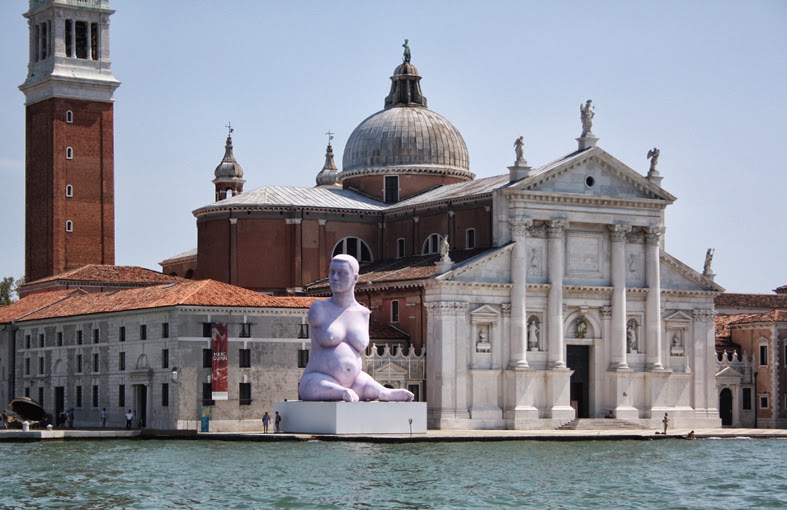
Palace of Creativity at the Venice Biennale
Given the decision of whether to spend our final few days in Italy in either Rome or Venice, the choice wasn’t difficult. Having avoided Venice previously because we believed it was a tourist trap, we had recently become enthusiastic converts having finally discovered it just a year ago. It turned out that Venice actually was a tourist trap after all, but oh what a trap! This city is so wonderfully unique that it simply can’t be resisted and so once again we were more than happy to take the bait. There was also another important reason for visiting once again and that was because this was the year of the renowned ‘Venice Biennale’. Occurring on every odd numbered year, this major exhibition attracts the world’s foremost contemporary artists and in the world of visual art it simply doesn’t get much bigger than this. As an art teacher, the Biennale is something that is generally read about but seldom experienced first hand, so the opportunity for me to visit would certainly be an added bonus.
With its origins dating back to 1895, the Venice Biennale has continued to evolve and now involves numerous countries from throughout the world presenting works based upon a selected theme. The theme of this years Biennale was ‘Palazzo Enciclopedico’ (The Encyclopedic Palace) ... “the desire to know and understand everything, a desire that recurs throughout the history of art” and not surprisingly the interpretation of that theme would vary enormously as we were to discover. With each country displaying their contribution in either the central exhibition halls or in their own purpose built pavilions spread over two sites, the exhibition would take many hours to view. So Jules and I prepared ourselves for a very big day and joined one of the queues that form early each day throughout the duration the Biennale (June to November), resulting in an attendance that regularly tops 300,000.
We began in The Giardini (The Gardens), which provided a leafy environment quite unlike anywhere else in Venice. Here, set amongst the trees is the large Central Pavilion as well as 30 other permanent national pavilions, each different in size and design. The grounds were spacious and on a warm summers day Jules and I enjoyed just wandering between venues in anticipation of what the next country might have to offer. Of course we patriotically sought out the Australian pavilion and while being a little confused about the work on display, we were particularly impressed by the contemporary nature of the exhibition space itself, complete with a retractable roof. We were also interested in the way each country chose to mount their exhibition. Some presented several artists who each interpreted the theme, while others simply chose to display only one large-scale work. Several other pieces combined elements of performance, with other works encouraging the interactivity of the viewer. Jules became involved with an installation by Russian artist Vadim Zakharov that consisted of a shower of gold coins falling three storeys high through the floors of the pavilion to the basement below to form a large pile of money on the ground. From here, only woman viewers (this is were Jules comes in) were invited to pick up a handful of the coins and place them into a bucket to be manually cranked back up by a man to the top so that the coins could shower down once again. Fortunately an umbrella was provided so that Jules could avoid being stoned to death by the force of the falling coins but otherwise it was all good fun, visually interesting and somehow managed to combine a vaguely cryptic social message.
Later we would head over to the second major site at The Arsenale (the original Venetian arsenal built in the 12th century) where the creative output continued. Here the works on display were even more adventurous with several exhibits combining film and audiovisual elements that often jarred our senses. While many of these were popular, we much preferred the more contemplative pieces such as those displayed in the Indonesian pavilion (their first ever contribution to the Biennale) that included a mystical piece by Albert Yonathan Setyawan entitled ‘Cosmic Labyrinth: The Silent Path’. Here under subdued lighting, a simple ceramic form had been repeated then positioned on the floor to create a visually evocative sculptural installation that perfectly reflected both its culture of origin and the title of the piece. Jules on the other hand was drawn to the sight and aroma of the floor installation of Sonia Falcona in the Latin American pavilion entitled ‘Campo de Color’, that consisted of hundreds of clay pots filled with colourful spices. I also particularly enjoyed viewing all 50 chapters of the ‘The Book of Genesis’ by Robert Crumb (one of my illustrative heroes) and I had to admire the way in which he tackled such an unlikely subject matter, taking him four years to complete the illustrations.
We had begun the day at 10.00am and walked out of the final pavilion at 6.00pm … it had been a marathon day, but one that was quite unforgettable. Like most art exhibitions, you are not expected to like all of the works that you encounter. Each has its own individual resonance and that’s what makes viewing contemporary art such a fascinating experience. The art works that we had viewed throughout the day had impressed us, inspired us, amused us, unsettled us, shocked us, entertained us and confused us, but they certainly didn’t disappoint. I had written copious notes on a small pad and had taken many photographs (it’s wonderful that the Biennale allows you to do that), so there was plenty for me to take away from the experience and eventually share with my students. The Venice Biennale had been a celebration of creativity that I was thankful to have experienced at least once.
Thursday, 8 August 2013
A Pilgrimage of Faith and Food
Umbria is a fascinating region of Italy that continues to attract visitors from all over the world for all sorts of reasons. For Jules and myself, it was its inescapable beauty and of course its great food and wine, but for others a journey to Umbria is much more of a religious pilgrimage. Indeed, the Christian faith here remains one of the most potent symbols of the region, evident in its incredible number of churches and its wealth of paintings and frescoes created during the peak period of the Renaissance. Of course, in the end all these factors begin to somehow overlap once you visit some of its major towns. Whether you are a Christian or not, you cannot fail to be impressed by its aesthetic contribution to the arts, while the link to the religion of gastronomy is also pretty hard to avoid. This was certainly our impression when we visited two of the more famous sacred towns of Umbria located not too far away from our home-base of Spoleto.
Assisi was about a 45 minute train ride away and offered us an opportunity to visit one of the prettiest and most significant religious towns in the country. As the birthplace of St. Francis and home of the Franciscan Order that he founded, Assisi is regarded as the most visited Catholic site outside of the Vatican. Upon our arrival we could see the old township of Assisi sitting high on the hill, distinguishable by the rows of arches that form the Basilica. In 1997 the walled city was hit by two devastating earthquakes, causing considerable damage to its historic buildings, requiring much repair work to be done in the preceding years. As we entered through the giant arches and made our way up the hill, we could clearly see the dedicated efforts of artisans in bringing the town back to its former glory. While the restoration is impeccable, we thought that it had tended to take away much of the patina of age, giving the town an almost ‘theme park’ quality. This feeling was further accentuated when we caught sight of coach loads of visitors descending upon the town and with that, the inevitable array of tourist stores that line its streets.
I’m not quite sure what the collective word for nuns is … Google suggested a flap of nuns, a convert of nuns, a gaggle of nuns and even a Whoopi of nuns! Whatever it is, there certainly seemed to be a lot of nuns in town visiting the various sites. It’s was clearly apparent that in the world of saints, St. Francis was indeed a superstar, attracting many faithful followers through his love of nature and animals. However, he is actually only one of the seven saints associated with Assisi, so there was plenty here to attract the nuns. Groups wearing the habit of their denomination could be seen wandering the streets throughout the town, admiring the churches, soaking up the history and picking up the odd souvenir. While we didn’t linger quite as long, Jules and I also weaved our way through the lanes, working our way upward to eventually reach the medieval castle called Rocca Maggiori. From this imposing building we were rewarded with the best vantage point to admire the town and the beautiful surrounding countryside.
Like most Umbrian towns, Assisi prides itself upon its homemade pasta, locally produced olive oil and truffles. There are also some particularly nice locally made wines and beers. However, the Franciscan monks have generally been reluctant to get themselves too involved in its production, leaving that enterprise to the Benedictine monks down the road in the nearby town of Norcia. Here, in the birthplace of St. Benedict, the monks have long been supported by their production of wine and beer and over the years they have developed some rather refined skills in that area. More recently they established a commercial brewery to produce a beer called ‘Birra Nursia’ that continues this centuries old tradition. In the name of research, we managed to sample a drop over lunch and it was certainly comparable with the best Belgian beers.
Norcia is much smaller than Assisi and has nowhere near the tourist traffic. It is located in a beautifully picturesque hilly location, which was easily accessible to Jules and I by bus. While for some a pilgrimage here means a visit to the birthplace of the Benedictine Order, for Jules it was the lure of the town’s reputation for cheese and pork products. The area is also well known for the quality of its truffles and the hunting of wild boar, which eventually finds its way into prized sausages and salami. The products produced here are so popular that they are shipped far and wide, providing a very sustainable industry for the towns folk. In fact the two major laneways in the old town are lined with little shops referred to as ‘Norciarias’ that are crammed with cured meat products hanging from their rafters and the overwhelming smell of cheese emanating into the streets.
In the centre of the town is the main piazza where a statue of St. Benedict takes pride of place and at one stage, we stepped into the town hall where several photos from the 1800’s reveal how little the town had actually changed over the years. I imagine that going back even further it would have looked pretty much the same as it did in the 13th century when the original monastery was first built and indeed why should it change! This is a sleepy little town with long established routines and traditions providing a lifestyle that would be difficult to improve upon. From the point of view of outsiders such as us, it seemed that the town’s folk had managed to get it right a long time ago. They had recognized that the secret to a good life could be found by simply providing sustenance for the spirit and for the stomach and who can argue with that!
Subscribe to:
Posts (Atom)